Factors That Set the Export Price of Dried Apricot
What sets the export price of dried apricot — sulphuring, size grade, moisture, destination-market requirements and delivery terms.

Dried apricot is a food product; what sets its price is entirely different from fuel or an abrasive. What actually drives this business is food criteria: sulphuring degree, size grade, moisture, color, the entry requirements of the destination market, and delivery terms. Below we open up each one from the buyer’s side — because if you state these in your quote request, the price that comes back will be close to real.
Sulphured or Natural: The First Split
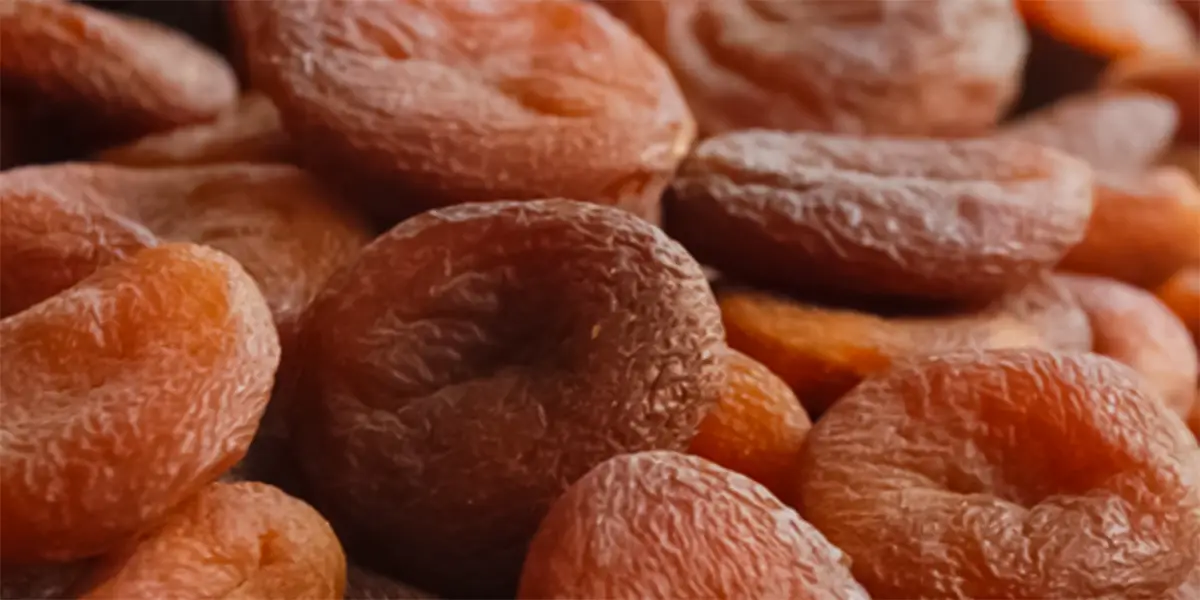
The first question that splits the price in two is whether the product is sulphured or not. Sulphured dried apricot holds its bright orange color and is generally associated with a longer shelf life; natural (sulphur-free) apricot has a natural dark brown tone and is preferred by markets that limit sulphur use or ask for an organic product. Because the two go through different processing and speak to different buyer segments, they’re discussed in different price bands. Which market and segment you’re selling to sets this choice — we covered the difference in detail in our Sulphured and Natural Dried Apricot article.
An important note: every destination market has its own entry requirements around sulphur and food safety. Because exact threshold values change by market and applicable regulation, giving a single figure would be misleading; instead, sharing your destination country up front lets us prepare the batch to that market’s requirements.
Size Grade and Visual Quality
In dried apricot, size grade is numbered by fruit size and is one of the most visible price factors: larger, more even and uniform fruit is generally valued in a higher band. Alongside this, color uniformity, fruit integrity (broken/bruised ratio) and moisture set the visual and textural quality the buyer expects. Moisture needs balance: too much carries mold and clumping risk, while overly dry fruit loses weight and texture. We don’t put color and moisture in a catalog; they move with every harvest. On a serious, high-volume purchase, a sample can be requested; if your destination market requires a lab report, we arrange this on request with an independent laboratory.
Season, Harvest and Origin
Dried apricot is an agricultural product tied to a single harvest period; years with an abundant or limited harvest are decisive for supply and, in turn, price. Malatya is the center of gravity of Türkiye’s dried-apricot production; being close to where the product is processed gives a supply advantage in terms of continuous access to size-graded batches prepared to market requirements. On the buyer’s side, the way to manage harvest fluctuation is to work on a regular schedule with a supplier that plans beyond a single season.
Quantity, Packaging and Continuity
In export, shipment is planned by the container; a one-off purchase isn’t assessed under the same terms as regular, repeating supply. Packaging choice also feeds into the quote: private-label carton headed for a retail chain carries different labor and material than bulk industrial use. Private-label/packaging requests can be planned for retail chains and distributors; stating this need up front makes the quote clearer.
Delivery Terms, Documents and Exchange Rate
The scope of the price changes with the delivery term: domestic delivery is discussed ex-facility/ex-warehouse, while export brings in Incoterms such as FOB or CIF, which set who freight and insurance belong to. In food export, the documents and sample-approval process the destination market requires also affect timing; we covered this flow in our Sample, Proforma and Letter of Credit in Export article. Because the product is priced largely in foreign currency, exchange-rate movement also feeds into the quote, which is why price quotes are given with a short validity period.
What to State for an Accurate Export Quote
We don’t give a single list price for dried apricot; the same product is priced very differently depending on the sulphur-grade-market combination. For an accurate quote, clarify:
- Sulphured or natural and your target market/country
- Your size-grade expectation and any specific color/moisture criteria
- Packaging (bulk, carton, private label) and order quantity/continuity
- Delivery terms — FOB/CIF and the destination port
Once these are clear, we prepare a quote suited to your market’s requirements and delivery terms. Share your target market and expected quality for Natural Dried Apricot and other items via the contact page; let’s talk through the rest together.