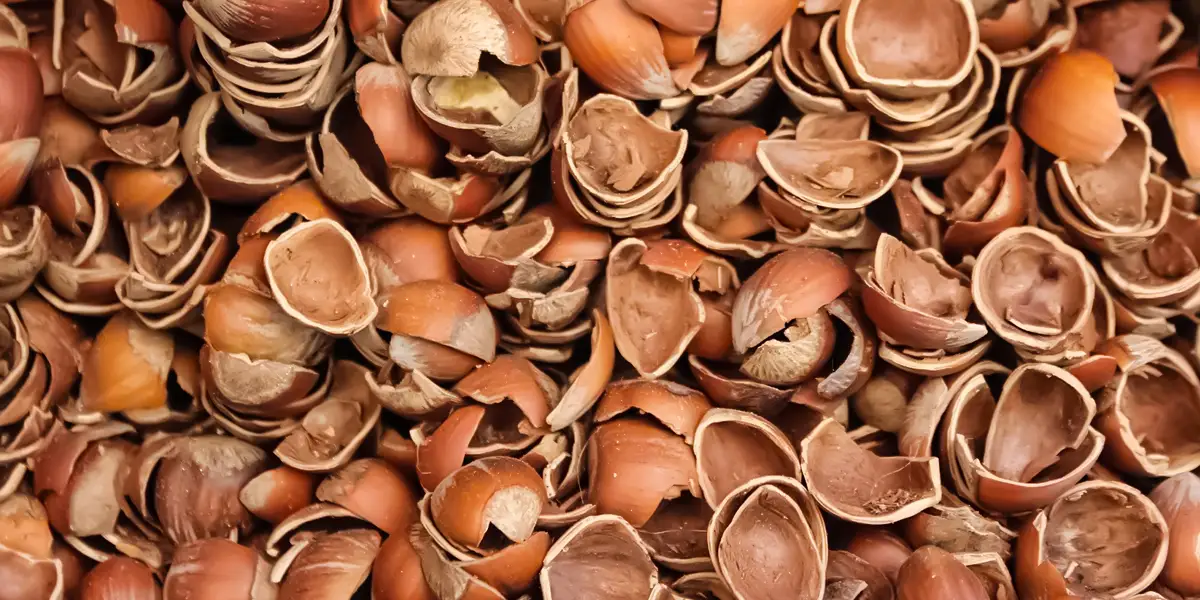
Nut Shells & Biomass Fuel
Hazelnut Shell
High-calorie biomass fuel and blasting abrasive; wholesale for domestic and export.
Ton · Truck/Container Get a Quote →
Filtration & Activated Carbon
The shell that feeds a filter bed and the raw material that goes into a carbon furnace share one problem: behavior shouldn't change when the batch changes. This page addresses that problem.

Buyers in this sector take two types of material from us. First: hard shell and granule available in defined calibre ranges, used as filter media in oil-water separation and industrial filter beds. Second: carbon-rich shell feedstock that goes into the furnace in activated-carbon production. What matters as much as the material itself is repeatability — arriving from the same source, at the same cleanliness, at the same calibre every time. Exact calibre is confirmed on request with a per-batch sample.
A filtration buyer looks not at the material but at how the line behaves. In an oil-water separation unit or an industrial filter bed, shell media holds the incoming flow and is cleaned by backwash; through that cycle the grain has to stay put — not disperse, not turn to dust, not clog the bed. When one batch behaves differently from another, the problem doesn't stay in the filter — pressure, backwash frequency and the maintenance calendar all shift together. That's why the first thing discussed in this sector isn't the product's name, but how closely this batch matches the last one.
On the activated-carbon side, shell isn't a fuel or an abrasive — it's an input. Producers running carbonization and activation processes want a hard, dense, homogeneous raw material free of soil, dust and foreign matter, because the homogeneity of what goes into the furnace directly determines the consistency of the carbon that comes out. These buyers usually decide on the basis of sample analysis, then ask about continuity of the same source. A single good batch doesn't mean much in this business on its own.
We are a supplier and exporter working close to the source. We take shell from cracking and kernel-processing facilities, coordinate the stricter cleaning standard that filtration and carbon-feedstock batches need according to intended use, and have packaging and paperwork prepared. We deliver by truck to refineries, filter operators, industrial cleaning firms and activated-carbon producers across Türkiye; for export we ship by 20ft or 40ft HQ container. We don't publish a price list — we quote once the product, calibre request, quantity and delivery point are clear.
What matters in this job
The core concern in this sector is repeatability. Two batches under the same product name that behave differently throw off backwash frequency and maintenance planning. That's why we treat keeping the source and preparation flow fixed, and discussing batch transitions in advance, as part of the job.
What determines performance in both a filter bed and a carbon furnace isn't a single measurement but how narrow the spread is. Fine dust clogs the bed; oversized pieces leave gaps. Calibre is matched to request; for high-volume requests it's locked in against the sample sent.
Soil, powdery fines or foreign matter mean a straight fault in filtration and inconsistent output in carbon production. Batches to a stricter cleanliness standard are available for this sector; the required cleanliness level is set before the order and isn't discussed after shipment.
Media replacement and furnace feeding are planned work; if material is late, downtime gets logged. Some sources flow year-round, others are harvest-dependent — off-season batches are planned around stock. On long-term agreements we set delivery dates from the start.
Products
Products that fit this job sit across 2 different lines of ours; below you can see where each one is useful. Price depends on the product, quantity and delivery point — how pricing is set.
The most-favored entry point in this sector, because Black Sea sourcing flows without interruption year-round and it's the lowest supply-risk item for an operation planning regular bed replacement. Its carbon-rich, hard structure also puts it on activated-carbon producers' feedstock list.
Most of the buyers coming to this page are looking for this item. What matters in beds that hold oily flow and release it on backwash is grain integrity, and walnut shell resists breaking down through that cycle thanks to its hardness. The discussion usually isn't about whether the material fits, but whether calibre stays consistent from batch to batch.
Coming out of kernel-processing facilities around Malatya, buyers feeding a carbon furnace ask for this item; its hard texture and availability at a homogeneous calibre stand out. Being seasonal, it's stocked after harvest — if you run a continuously fed line, the schedule needs to be locked in up front.
One of the densest shells we carry; activated-carbon producers ask for this item specifically because of its hard, tight structure. That density is decisive for buyers who need durability both in pre-furnace preparation and in beds working under abrasive load.
High-calorie biomass fuel and blasting abrasive; wholesale for domestic and export.

Hard and dense; preferred as industrial abrasive and filtration media.

Malatya origin; high-lignin biomass and cosmetic peeling raw material.

High hardness; blasting abrasive and activated-carbon feedstock.
A different axis from hard shell: its light, porous structure pulls liquid in rather than holding it on the surface. It should be considered for jobs that need absorbency, not for lines looking for bed media — the two needs sit on the same page but aren't solved with the same material.
A general-purpose option available in defined calibre ranges; used in filtration systems as a natural, renewable alternative to synthetic media. The first item that equipment makers and operators running with ready-calibre granule, rather than whole shell, look to.
A hard granule that arrives already at a defined calibre; carbon producers whose line has no grinding step move straight to furnace feeding with this item. Homogeneity here is less about the material itself and more about how tightly the calibre was held.

Absorbent and abrasive; industrial cleaning and bedding applications.

Calibrated abrasive granule; for blasting and filtration.

High-hardness granule; heavy blasting and lapping.
Selection guide
Tell us what you need; let's narrow it down together.
Tell us what we needThe two may want the same shell, but not the same batch. A filter bed is about not dispersing and holding up to backwash; carbon feedstock is about structural tightness and homogeneity. Tell us which side you're on in the first message and we skip an unnecessary round of sampling.
Operations with their own grinding step prefer working with whole or cracked shell; for those without such a step, granule goes straight into the process. This choice is less about cost and more about where your process starts.
Walnut and peach kernel shell last long under abrasive load thanks to their dense structure; corn cob granule sits at the opposite end, working through absorbency. Hazelnut shell sits in between — balanced and the most abundant option.
In this sector, calibre and cleanliness level aren't a detail to discuss later — they're a condition of the job. For high-volume requests, the specification agreed on the sample sent goes into the order text; on request, a sample of the batch to be shipped is available.
FAQ
Walnut shell is the most-preferred item in this application; its dense texture holds up without breaking down on backwash. For operations that want ready-calibre material on their line, hazelnut shell granule is also on the table. Tell us your system and the calibre spec you want and we'll suggest the right fit, confirming with a sample on high-volume requests.
Hard, dense shells stand out: peach kernel shell, apricot kernel shell and hazelnut shell are on this list. Lines running with granule take peach kernel shell granule already at a defined calibre. The decision is usually made after sample analysis, and then continuity of the same source is discussed.
We don't publish a fixed list, because calibre changes from batch to batch with the source and the grinding process; we don't want you relying on a table on paper and ending up with the wrong material. Here's how it works: tell us the spec you want; for high-volume requests we match a batch to it and send a sample. Once we agree on the sample, that spec becomes the order condition.
Shell-based media are materials that can be backwashed and returned to service in filtration; that's why they're considered long-lived in this sector. How many cycles it will take depends on your system pressure, the fluid's contamination load and your backwash regime, so we don't commit to a fixed cycle count. The right question is: does the incoming batch behave the same as the last one — for batch consistency we source from the same origin and the same calibre range; a sample is the reference for the values.
Yes, domestic delivery is a natural part of our business in this sector — in fact, most of the work starts here. Domestic deliveries move by truck; the process runs shorter and more flexibly than export. Export adds a 20ft or 40ft HQ container, standard Incoterms such as FOB/CIF, and the paperwork flow. The sample-approval step can apply the same way to both on high-volume requests.
Hazelnut shell is our most stable source year-round; seasonal items like apricot and peach kernel shell are stocked after harvest and spread across the year. If you share your bed-replacement or furnace-feeding schedule up front, we write the delivery plan into the agreement. Giving advance notice of batch transitions is standard practice for our regular buyers.
Get a quote
Tell us your job and delivery point (domestic or export); we'll clarify the right product and terms together.
This site uses essential cookies and — with your consent — analytics cookies. For details, see Cookie Policy.