Nut Shells & Biomass Fuel
Hazelnut Shell
High-calorie biomass fuel and blasting abrasive; wholesale for domestic and export.
Ton · Truck/Container Get a Quote →
Landscaping & Bedding
The same product family covers a park's ground, dries out a barn's bedding, fills a heat pad. Tell us which one you're after — we match the batch to it.

Buyers in this sector take cracked hard shell (hazelnut, almond, pistachio), cleaned sour cherry pit, and absorbent granule (corn cob, pistachio shell granule). Being natural, free of chemical additives and available at volume is why they replace mineral and plastic alternatives. What matters here isn't calorific value — it's absorbency, dust content and color-size consistency; batches are selected separately against these criteria.
A buyer coming to this page isn't really buying "shell" — they're buying a ground cover, a bedding, or a filling. A parks-and-gardens department and a poultry-farm operator look at the same product family, but ask completely different questions: one wants color not to shift batch to batch, the other wants to know how much liquid the bedding absorbs and whether dust reaches the animal's nose. On our side, that difference means the same shell available in a different specification. That's why we ask about intended use before the product name when taking a request.
Domestically, the heaviest demand comes from municipal parks-and-gardens departments, landscaping contractors, farm and poultry operations, pet-product packagers, and heat-pad/craft workshops. What matters to these buyers is volume and continuity: the same-looking cover through a season, the same absorbency through a year. Requests are planned as sacks, big-bags or bulk truck/lorry loads; packaged shipments are common for small landscaping jobs, bulk shipment for large-area and tender work. We don't publish a price list — we quote once the item, volume, packaging and delivery point are clear.
On the export side, the same items become feedstock for packaged decorative garden products and pet bedding sold at retail; we ship by 20ft or 40ft HQ container on FOB/CIF terms. We are a supplier and exporter working close to the cracking/processing facilities where the shell and kernel separate. We source from origin, coordinate washing and cracking to the intended use, and have packaging and paperwork prepared. On high-volume jobs the most critical part is closing the gap between the sample and the final batch — especially where color is a criterion.
What matters in this job
In barn, coop and pet bedding, how much liquid a material absorbs and how fast it dries directly sets both barn hygiene and cleaning labor. Fibrous, porous structures stand out for this job; hard, dense shells work on a different axis, not this one. Absorbency figures are typical reference ranges; we suggest trying a sample under your own conditions rather than taking a claim on paper.
In an enclosed coop or barn, dust is a direct issue for the animal's breathing and the worker's comfort. In pet bedding sold at retail, dust released on opening the pack is what kills the product on the shelf. Bedding-purpose batches to a stricter low-dust standard are available for this reason; writing "low-dust" into your request changes which batch gets selected.
On a park or garden's ground cover, color drifting batch to batch is the criterion that gets a job rejected on delivery. Light, even-colored shells and darker-toned ones don't go into the same job; size distribution also sets the surface texture. Decorative batches are selected separately for color and size consistency; on high-volume jobs, the final batch can be approved against a sample match.
This sector's items are low unit value, high volume. The question isn't "the best shell" — it's finding the most economical shell that does the job, in reliable volume. Hazelnut shell is the most abundant source year-round; seasonal items are scheduled around post-harvest stock. If you run a seasonal landscaping program or a year-round bedding need, we set the delivery schedule up front.
Products
Products that fit this job sit across 2 different lines of ours; below you can see where each one is useful. Price depends on the product, quantity and delivery point — how pricing is set.
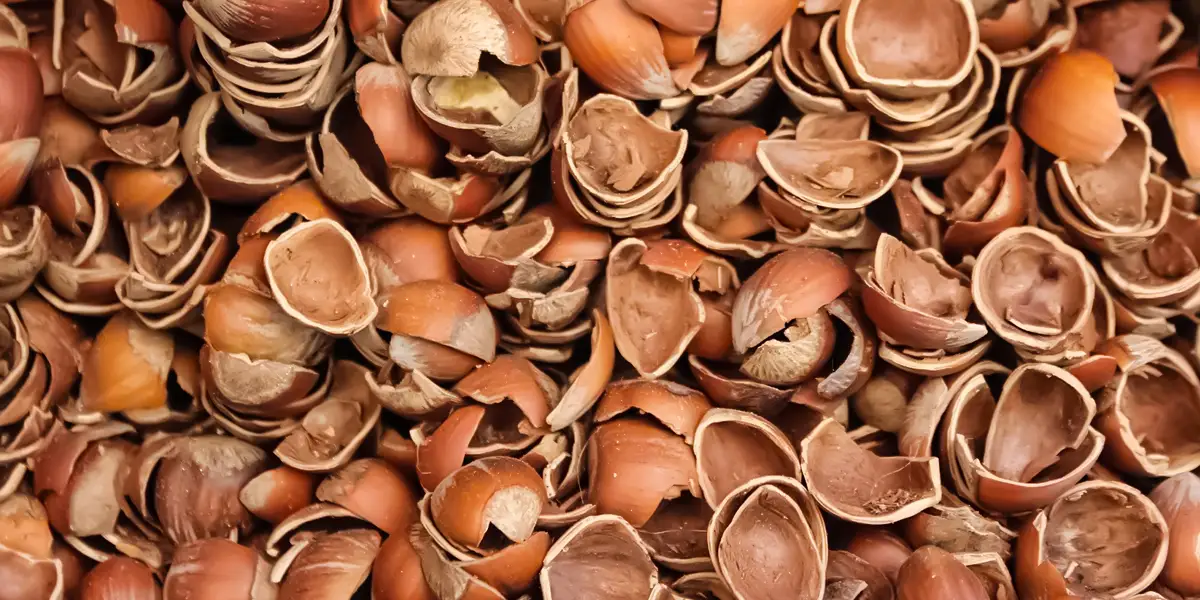
Its cracked form is spread as natural cover on garden and park ground; its dark, warm tone and year-round abundant sourcing make it the easiest item to plan for large-area landscaping jobs. A finer crack is also considered on the farm-bedding and filling side.
This sector's bedding item: its fibrous, light structure raises absorbency, making it an economical option in barn and farm use. Its ground form also goes into compost mixes as a soil-aerating plant filler.
Its light, even tone is exactly what decorative landscaping looks for; because appearance comes first, these batches are selected separately for color and size consistency. Its cracked form is also used as an economical filler on the bedding side.
An item for filling, not landscaping: its smooth surface and uniform size are the structure heat-pad manufacturers and craft workshops look for. Going into a skin-contact product, washed and dried batches free of dust can be sourced.
The bulky item on the bedding side: its fibrous, porous structure pulls in moisture, and its coarse texture gives a thick base in cattle housing without falling apart. Its ground form is also asked for as coarse fiber in compound feed; since it's shipped bulk only, it suits operations with unloading capability on site.
High-calorie biomass fuel and blasting abrasive; wholesale for domestic and export.

Light, fibrous shell for biomass fuel and animal bedding.

Decorative and fuel-grade; low moisture, ready for wholesale shipment.

For heat-pad filling and light abrasive use; whole or cracked, as requested.

A light, fibrous legume husk; fuel as pressed pellet, bedding in natural form — bulk only.
The standout item on the absorbency axis; its porous, light structure is used in cage bedding, pet products and high-volume filling applications. Calibre is matched to request, and absorbency and moisture figures are typical reference ranges, confirmed with a sample.
Its low-density, natural-looking structure is used as a filler component in decorative product mixes and ground covering. Manufacturers looking for a fine-grain alternative to garden mulch ask about this item.
Selection guide
Tell us what you need; let's narrow it down together.
Tell us what we needAll three come from the same product family, but not the same batch. Color and size decide for cover, absorbency and dust for bedding, smoothness and hygiene for filling. Writing the intended use at the top of your request directly changes which batch gets selected.
Pistachio shell, with its light, even tone, suits decorative jobs; hazelnut shell, with its darker look, is preferred for large surfaces. Natural product can carry batch-to-batch tone variation — if your criterion is strict, we work off sample approval and match the final batch against that sample. Some natural tonal shift is expected outdoors from sun and rain over time — we say this up front.
In coop, barn and pet-packaging use, dust content isn't a standard, it's an order condition. Batches to a stricter low-dust standard are available. Packaging choice (sack, big-bag, bulk) also affects how dust behaves in transit — we discuss the two together.
A single test truckload and a year's bedding need are different transactions. If you're running a seasonal landscaping program, a tender or continuous bedding consumption, the delivery schedule is set up front and stock is reserved for you on seasonal items. We plan domestically by truck/lorry, and for export by 20ft or 40ft HQ container.
FAQ
Light-colored pistachio shell is preferred for decorative, visible surfaces; the cracked form of hazelnut shell is common for large, cost-focused areas. If a finer texture is wanted, pistachio shell granule is also considered. Tell us the area size and the look you want and we'll suggest the right fit; on high-volume jobs a sample can be arranged accordingly.
Corn cob granule and fibrous almond shell stand out on absorbency. Which one suits your barn depends on animal type, cleaning frequency and floor type. Absorbency figures are typical reference ranges; we don't recommend deciding without trying a sample under your own conditions.
Yes. For bedding and enclosed-space use, batches to a stricter, low-dust standard are available. We write this into the order condition — it's not a detail discussed after the fact. On high-volume requests, shipment can be planned once you've seen and approved the dust level in the sample.
Color holds for a long time with proper drying and storage, but some natural tonal shift is expected outdoors from sun and rain over time. We say this up front, because we don't want surprises on decorative jobs. A sample comparison is also done for natural tone variation between batches.
Landscaping and decorative requests are usually planned as sacks or big-bags; bedding and large-area work as bulk truck/lorry, and export by 20ft or 40ft HQ container. Send us your volume and delivery point and we'll settle the right packaging together. We don't publish a price list; the quote depends on item, volume, packaging and delivery point.
When sour cherry pit goes for pillow filling and craft use, it can be sourced washed and dried, free of dust and odor; size consistency can be matched to request. Going into a skin-contact product, this specification can be stated at the request stage. On large-volume production plans, a sample evaluation can come up on request.
Get a quote
Tell us your job and delivery point (domestic or export); we'll clarify the right product and terms together.
This site uses essential cookies and — with your consent — analytics cookies. For details, see Cookie Policy.

