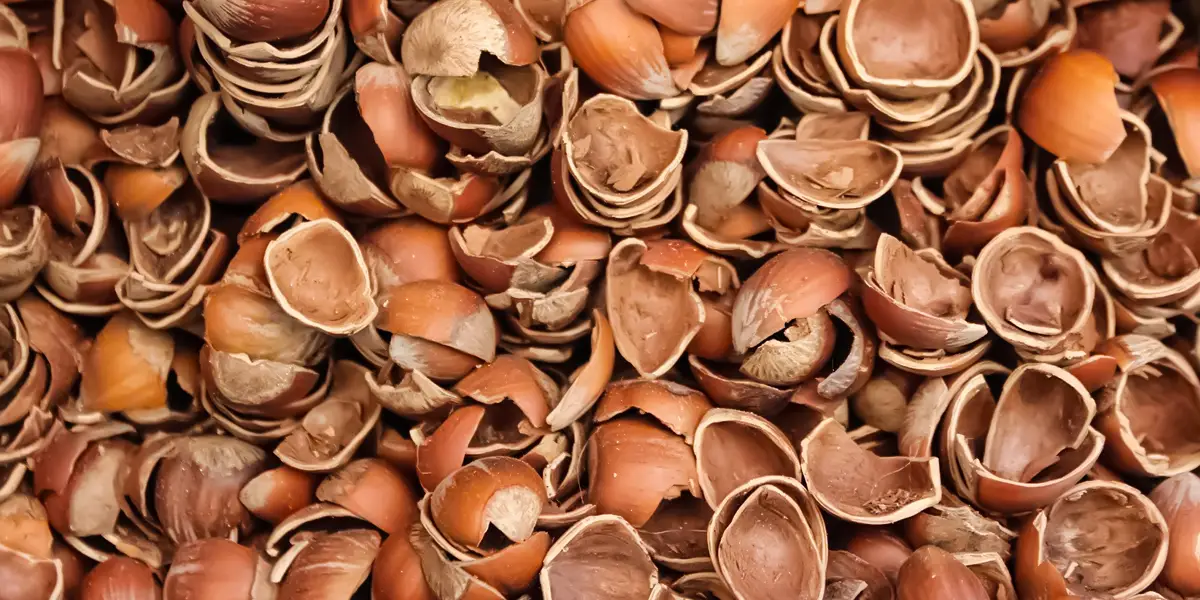
Nut Shells & Biomass Fuel
Pistachio Shell
Decorative and fuel-grade; low moisture, ready for wholesale shipment.
Ton · Truck/Container Get a Quote →
A light biofuel pressed from legume husk and shipped in bulk — in container export, volume planning comes before weight.
Sales unit: Ton · Truck/Container · No price shown; settled by quote

Peanut shell is the light, fibrous outer husk left over after shelling peanuts, a legume; unlike hard shells, it is pressed into pellet form and shipped only in bulk.
Peanut shell is a by-product left at shelling facilities along the Çukurova and Aegean belt after the kernel is separated. The name gets confused with hard shells, but the material is quite different: being a legume husk, it is fibrous and porous rather than woody, and its bulk density is noticeably low. This has a direct effect on sourcing — the vehicle fills up by volume well before it reaches the weight limit, so an export batch is planned around container volume rather than tonnage, which is why we usually gather batches in pressed pellet form. We deliver by the truck to domestic facilities and by the container for export orders; there is no packaging option, the product ships only in bulk.
Burned in boilers in pressed pellet form; if raw husk is to be burned, the feed system needs to suit the light material.
Its fibrous structure absorbs moisture and stays put without scattering; a common choice in cattle housing.
Its ground form adds coarse fibre and bulk to rations; protein value is low, and the inclusion rate is set under a feed specialist's guidance.
Taken by pressing plants as a raw material whose volume can be reduced and that stores well.
Its cracked form is used as natural ground cover in gardens and greenhouse floors.
Plans raw material on a volume basis; looks for bulk-unloading capability and steady batch continuity.
Wants highly moisture-absorbent, non-scattering, cheap-to-handle bedding; stocks seasonally.
Looks for a ground, foreign-matter-free batch as a coarse-fibre source.
Plans price and freight knowing that net tonnage per container is capped by volume, not weight.
The first question here is intended use: the fuel side wants pressed pellet, while bedding and feed uses want natural or ground husk — these are different batches. The second factor is your unloading setup on site — since the product ships without packaging, we build the shipment plan around bulk-unloading capability from the start. In boilers where calorific value is the priority, hazelnut shell or pine pellet may be a better fit; peanut shell's main advantage is its lightness and absorbency.
No. Peanut is a legume with a light, fibrous husk; pistachio shell, by contrast, is a hard, dense, woody shell valued for fuel and activated-carbon uses. Stating which one you mean in your order prevents the wrong shipment.
The product is light and voluminous; carrying it in sack or big-bag unnecessarily inflates unit cost and handling. No packaging option is offered for this product.
Net tonnage varies with the pressing degree and the batch; since the husk is light, the container fills by volume before it reaches the weight limit. So we don't commit to a tonnage figure up front — the loading plan is worked out from the batch.
Pressed pellet form is preferred; since its volume is reduced, it causes no trouble in transport or feeding. Raw husk can also be burned, but the boiler's feed system needs to suit the light material.
Not directly. It is ground and added to compound feed as coarse fibre and filler; since its protein value is low, it is not the main ration item, and the inclusion rate is set under the guidance of a feed specialist or veterinarian.
These values vary by batch with the source and the pressing/drying process; an exact figure is not committed to, and for serious-volume requests they are confirmed with a sample.
Husk output depends on the post-harvest shelling season; off-season batches are planned according to stock. If you share your annual need up front, we set the schedule accordingly.
Related products
Decorative and fuel-grade; low moisture, ready for wholesale shipment.

Economical biomass solid fuel from olive pomace.

Light, fibrous shell for biomass fuel and animal bedding.
Get a quote
Tell us the quantity and delivery point (domestic / export); we’ll get back with price and terms.
This site uses essential cookies and — with your consent — analytics cookies. For details, see Cookie Policy.